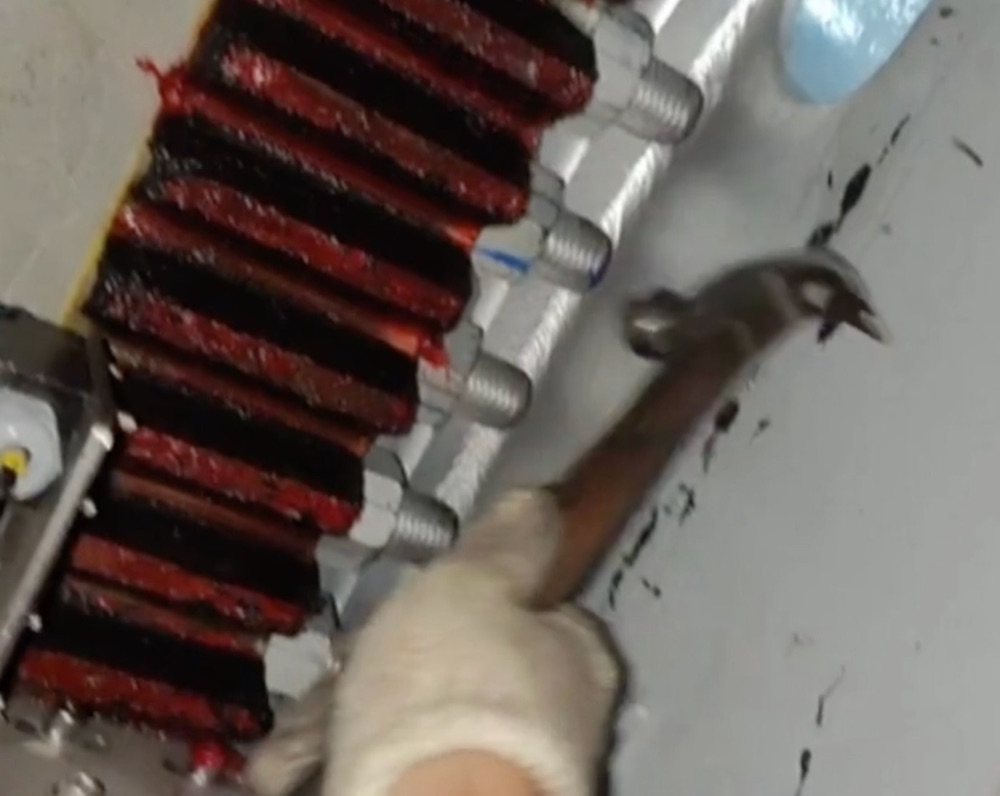
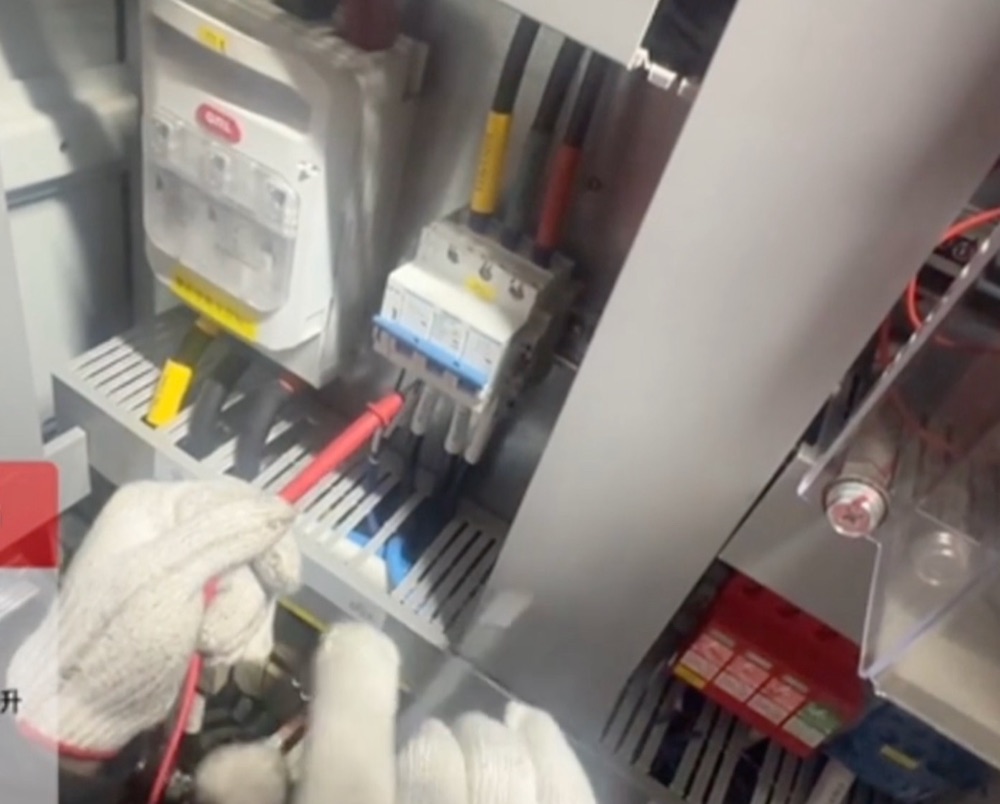
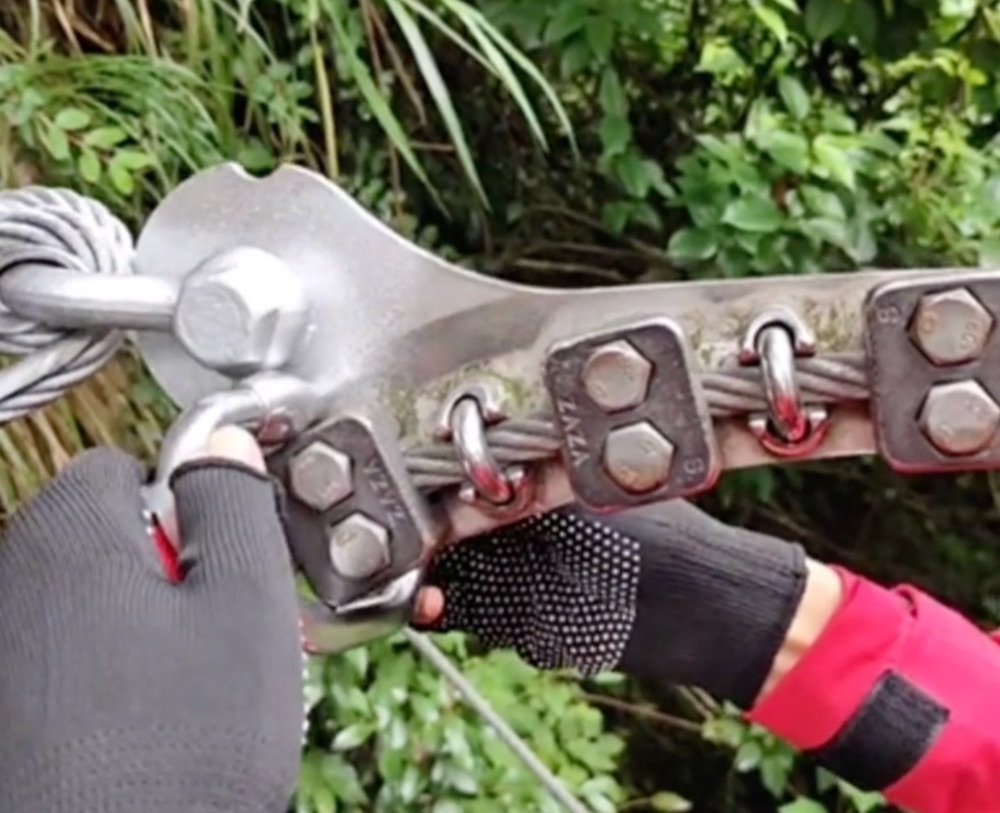
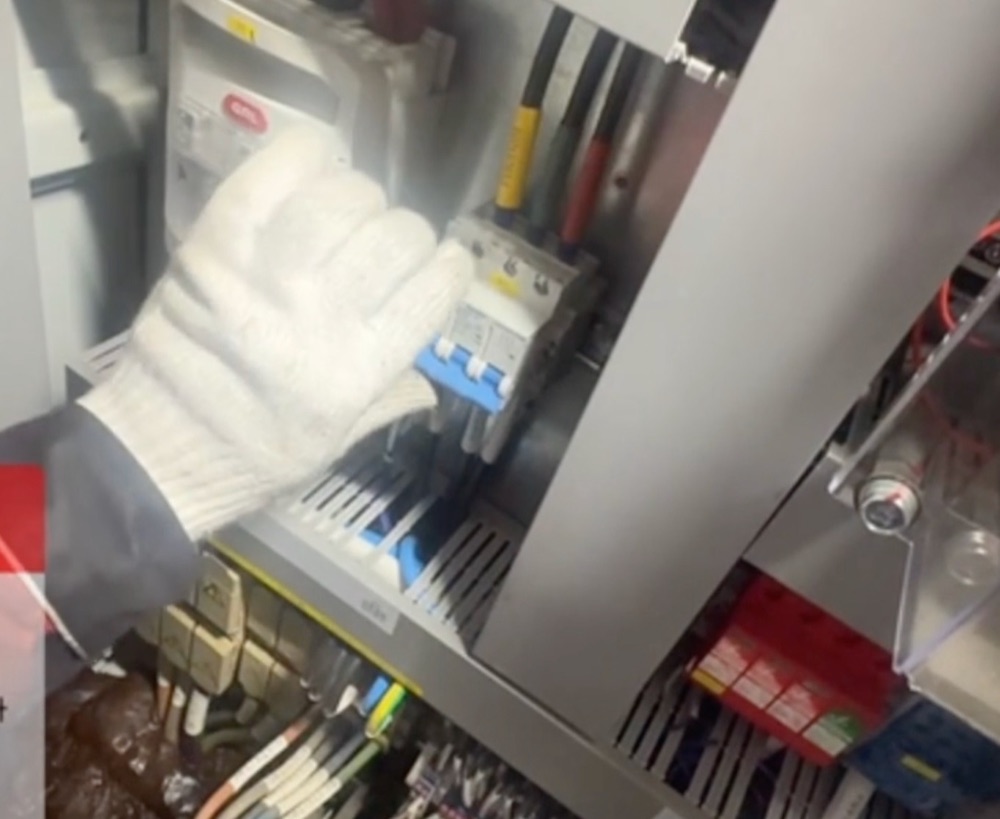


Four kinds of models, one source of real work.
Arm's-length, near-first-person views of hands and tools, plus targeted first-person collection to your task list. Pre-training scale without teleoperation cost.
Unedited, real-time footage where the subject of every frame is an action changing the state of an object. Scene diversity the open web does not have.
Walk-through video of sites under construction, renovation and inspection. The in-between states that synthetic and scanned datasets leave out.
Workers photograph the same spot every shift. Sequenced by timestamp and GPS, a building grows from foundation to roof: before/after pairs at zero labeling cost.
An order of magnitude beyond any first-person corpus that exists today.
The largest public and in-house egocentric corpora sit between 200K and 1M hours; the largest published action-labeled set is around 20K. This pool adds 80K to 170K hours of new video every day and grows without a collection budget. Every upload is stamped with time and location at the moment it is taken, not afterwards.
Raw pool is not training-ready pool. Scale is the entry ticket; selection and labeling set the price. Every delivery passes scene filtering, quality QC and trajectory extraction before it ships.
Nineteen countries, one capture behaviour.
Web video is supplied by what is worth watching. This footage is supplied by what work needs evidence.
It lands, by construction, where web video never goes: switch rooms, utility tunnels, elevator shafts, farm pens.
By national industry classification. Labeled for about two-thirds of the region's daily actives.
Self-declared in-app. Low coverage, so this shows the shape of those who declared, not the size of the pool.
The two columns are counted differently and are not comparable side by side. Each is a share of that region's labeled users.
Bands are 90-day averages, not a single-day snapshot: S is above 2M daily, A 500K–2M, B 100K–500K. Per-scene absolutes are released under NDA.
Breadth, depth, and the parts a demonstration set edits out.
Scale gets a corpus considered. What a policy learns from is which trades are in it, how much of each, and whether the footage contains work going wrong as well as work going right.
Eighteen industry classes inside China and ten more outside it, running past construction and logistics into utilities, agriculture, waste and repair. A curated set stops near the head of that distribution. Deployment happens along the tail.
Volume does not thin out as the list lengthens. A single industry carries enough hours to train against on its own, rather than being sampled a handful of clips at a time.
This is footage of real jobs, so it holds mis-grasps, dropped parts, the wrong tool reached for first, and the correction that follows. Demonstration data is filmed to succeed. A policy learns to recover only from footage where something needed recovering.
The same job runs differently across nineteen countries — different tools, materials, layouts and pace. That variance is what tells you how a robot behaves once it leaves the site it was tuned on.
The footage exists whether or not anyone orders it.
Robot hardware, a venue and a dedicated operator per hour. Scenes stay inside the lab.
Trackers and gloves, a staged set, and paid participant time for every hour recorded.
Approaches hardware amortization. No paid labor hours: data is a by-product of work. Hardware is deployed once and reused. 65M users are the distribution channel; no recruitment.
Which is why volume does not buy it. Four things a competing supplier cannot simply spend its way into.
This footage is produced every day whether or not an order exists. Ten times the order volume adds QC and labeling staff, not capture staff — where a crowdsourced shoot pays proportionally more for every extra hour.
The app prompts during filming: put both hands in frame, hold the camera still for ten seconds, that step did not read — take it again. A few questions follow on tool type and whether the task completed. Footage is produced to your spec rather than filtered to it afterwards.
Head- and chest-worn devices are not issued to everyone. Capturers are scored on delivery record, footage quality and device return, and hardware goes to those who clear the bar. At fleet scale loss and damage stop being a cost question and become a capacity one: an unpredictable attrition rate is a delivery volume you cannot commit to. Higher-scoring capturers also return a markedly better effective rate.
Time, coordinates, device fingerprint and upload path are written as the footage is taken, not attached afterwards. Every sampled clip traces back to its original upload record.
By spec, by the effective hour.
Filter by scene type, task, region, time window and device. Delivered as episodes with GPS, timestamp and device metadata.
Segments where hands manipulate tools and objects, labeled for hand pose, contact state and task phase in the Singapore pipeline.
Define the task, viewpoint and environment. Capture tasks go out to matching workers; first batches return in days, not months.
Bring your fleet or lab recordings. Same Singapore team, same schema: contact state, hand pose, task phase, language description.
Hands or the worked object in frame and not persistently occluded; duration and clarity above threshold; the task reaching a definite end state — failure counts as an end state; nothing that cannot be de-identified. Where your standard differs from ours, yours governs.
Every batch ships with its own effective rate. That rate is the first thing our own production line is measured on: capture-end prompting, automatic QC and de-duplication, rejection, labeling — task segmentation, action tags, hand-object interaction, failure flags — then sampling, then delivery.
One week to align on spec, two to three for a pilot batch delivered with its effective-rate report and labeling samples, one week to freeze the spec, then rolling delivery — capacity stepped up scene by scene.
We deploy capture hardware across the network — yours, or sourced for you.
Hardware is rarely the constraint; distribution is. Bring the capture devices you already use and we put them on workers already on shift, or we source third-party devices to your spec where you have none — and run them either way.
Send us the capture devices you already run. We handle distribution, worker onboarding and day-to-day operation across the network.
No hardware of your own? We source, configure and deploy third-party capture devices to your spec, and operate them the same way.
Captured worldwide. Processed in Singapore. Delivered to your lab.
Inside Timemark's daily workflow. Consent and rights handled at the app layer; footage is uploaded on capture with metadata attached.
Faces and identifiers removed; episodes cut and labeled to your schema. All data products contract and ship from the Singapore entity.
Bucket delivery or API pull, in the format your training pipeline reads. Priced per delivered hour.
Capturer consent covers purpose, retention period and third-party use, traceable to the individual and the moment it was given.
Faces and identifying marks blurred by default; coordinates can be coarsened on request. Where your licence allows it, unblurred delivery is available.
Client names, work orders, drawings and nameplates are removed or masked during QC.
Southeast Asia, Latin America and Middle East supply can open batches now.
Every hour of Physical AI data has to be captured by someone.
Language models trained on an internet that already existed. Physical AI has no such archive. Lab teleoperation covers a few hundred operators and a few scenes; the long tail of real work is not in it.
Timemark is the camera workers already use to document their jobs. We built the network that turns that footage into training data, and the Singapore pipeline that delivers it.